An Aggressive & Accessible Criminal Defense Attorney You Can Trust
Should you choose to hire our firm, you can have confidence in how your case is being handled. We are committed to finding the best possible outcome to your case, whether that means going to court or negotiating for a settlement. You will work directly with our attorney, and will never be left in the dark about the status of your case.
After being arrested, your next step should be to seek out personal and reachable representation. The sooner we can develop a personalized defense plan that addresses the unique aspects of your situation, the better of a chance you have to resolve your situation favorably.
Our firm is devoted to helping you through each stage of your case. We have an extensive understanding of the criminal justice system and stand ready to take on even the toughest of cases.
Knoxville Criminal Defense
Commonly Asked Questions
Straight answers about how criminal cases actually work in Knox County — drawn from the courts' own published rules of practice and clerk guidance.
Missing a setting is treated as a violation in itself. Under the Knox County General Sessions rules of practice, you are responsible for knowing when you are scheduled to appear, and for appearing at every hearing, trial setting, subsequent setting, trial, report-back date, and scheduled mediation session. Failure to appear constitutes contempt of court.
You must also be physically present at each hearing or trial unless your absence is waived in advance in writing and ordered by the court.
The consequence is fastest in Bonded Arraignment Court. If you were released from custody without seeing a judge or magistrate, you must report on the date and time your release officer specified — and failure to report for arraignment as scheduled will result in the immediate arrest of the defendant.
If a date has already been missed, how quickly it gets addressed matters. Speak to a defense lawyer immediately rather than waiting for the court to act.
No — and this is one of the most common misunderstandings about the process.
The Knox County Criminal Court Clerk's Office states plainly that it cannot offer legal advice and does not have the ability to reset court dates. The rules of practice reinforce it:
Clerks of Courts are not authorized to grant continuances.
Non-attorney court personnel are prohibited from interpreting any rules of procedure or giving legal advice.
Court personnel assume no responsibility for misinformation about substantive law, procedural rules, local rules, or local customs.
Changing a date takes a motion that a judge acts on — and motions for continuance are acted upon in open court whenever practicable. A phone call to the clerk's counter will not move it.
Often not. Five judges preside over the Knox County General Sessions Courts. They are popularly elected to eight-year terms and rotate through the courts on a five-week schedule, so a case that runs several months can be heard by more than one of them.
That is a concrete reason local familiarity matters more here than in a single-judge court. Knowing how each of the five tends to handle bond, continuances, and negotiated resolutions affects when it makes sense to push a case forward and when it makes sense to wait.
Fewer times than most people expect. The first time a case is set for trial it may be continued for good reason within the sound discretion of the judge. The second time and after, it will be continued only for compelling reasons.
The rules go further and name reasons that generally will not be found compelling:
The client has not paid the fee
The client has not been to see the attorney
Lack of preparation
Any other reason that was known, or should have been known, at the time of the first continuance
The rules also note that consideration is given to attorneys who communicate with opposing counsel ahead of the trial date, who move for a continuance in advance rather than on the morning of, and who contact witnesses to prevent needless inconvenience. In practice, that rewards getting counsel involved early — before the first setting has already been spent.
Yes — but there are guardrails worth understanding.
An initial application for a criminal warrant or criminal summons must be made to a Judicial Magistrate, and magistrates may sign criminal warrants or summons for prosecutions initiated by private citizens. Knox County has five magistrates, appointed to set bonds, sign arrest warrants, and issue search warrants.
A denial is not a free retry. If a magistrate declines to issue a warrant for lack of probable cause, the person applying cannot simply approach a different magistrate. The rules require them to consult the District Attorney's office first, conduct whatever additional investigation is recommended, and volunteer that they are applying a second time on the same incident. Approaching three or more magistrates on the same facts is expressly never appropriate.
The rules state that one purpose of this procedure is to discourage forum shopping. If you have learned that someone is trying to swear out a warrant against you, that process is already underway and worth getting ahead of.
Sometimes. The General Sessions Court Mediation Program gives the public an opportunity to resolve some categories of civil and criminal disputes through court-based mediation.
For a criminal case, the rules of practice require that mediation be coordinated with and approved by all of the following before it can be scheduled:
The District Attorney General
The defense attorney
The affiant or complainant
The defendant
So it is a genuine option, but never a unilateral one. Two further points worth knowing:
The court's mediators are specially trained volunteers from the Community Mediation Center with a minimum of 40 hours of certified mediation training. They do not decide the outcome — mediation is not arbitration.
Mediation is voluntary and can be terminated at any phase by any party or by the mediators. It is also not a right, and is subject to the availability of court mediators.
If mediation is scheduled, treat it as a required court appearance — the rules list each scheduled mediation session among the dates a defendant must attend, alongside hearings and trial settings.
Having a local Knoxville criminal defense attorney is crucial because he is familiar with the specific laws, procedures, and court personnel within the Tennessee legal system. This local insight can be invaluable in crafting a defense strategy tailored to the nuances of the legal environment, potentially increasing the chances of a favorable result in your case.
Law Office of Joseph A. Fanduzz is dedicated to making sure that the voices of the criminally accused are heard within the criminal justice system. If you're facing charges in Tennessee, our firm offers aggressive representation and effective counsel, guiding you through each step of the legal process, from investigation to potential trial and appeal, to protect your rights and work towards a favorable outcome.
Most of these deadlines run whether or not you have a lawyer yet — and several of them get harder to fix the longer they sit. If you have a Knox County court date, the useful time to ask questions is before it.
Court rules, schedules, fees, and judicial assignments change. Confirm current requirements with the Knox County Criminal Court Clerk or your attorney before relying on them. This information is general and is not legal advice for any specific case.
“Mr. Fanduzz is committed to nothing but the BEST outcome for his clients.”
Nearly two years ago, I was charged with DUI and Speeding. Due to my occupation, a conviction could be detrimental to my career. I contacted Mr. Fanduzz and he was able to have my case placed on Judicial Diversion, which required me to serve only one year supervised probation (reduced from two years) and court cost. I retained my drivers license and did not have to purchase expensive car insurance.
Unfortunately, while on probation, I was charged with two counts of assault and aggravated assault. Along with these new charges, I also faced violation of my probation and the original DUI. All charges were considered Felonies at this point. There was no hesitation in hiring him to represent me again. Mr. Fanduzz not only kept me well informed, he also skillfully and agressively argued on my behalf. He arranged for my probation and judicial diversion to be reinstated and the felony assault charges to be dismissed in exchange for a plea to a misdemeanor offence.
Needless to say, I highly recommend Mr. Fanduzz because of his attention to detail and commitment to have the BEST possible outcome for his clients.
Been a member of the National Criminal Defense College (NCDC) since 2012.
17 years of legal experience, creating customized strategies & individualized client attention.
Highly skilled in the areas of litigation & negotiation when seeking results.
Available to help you & answer your questions 24/7.
DUI Detection & Standardized Field Sobriety Testing Certified
Knox County · Court Venue Guide
Which Knoxville Court Will Hear Your Case?
Knox County runs criminal dockets in at least six separate courts across four buildings — plus a set of treatment courts most people never hear about. This is a map of all of them, built from the courts' own published rules and clerk guidance.
Most cases start in
General Sessions City-County Building
Criminal dockets
4 courtrooms all on the main floor
Caseload
60,000+ a year General Sessions, all five courts
Clerk
(865) 215-2375 Mon–Fri, 8:00–4:30
Start here — charge to courtroom
Knox County assigns cases to dockets by offense type, not alphabetically or by arrest date. Find your situation on the left to see where the case is heard and which building to drive to.
Your situationHeard inWhere
Most misdemeanors, and felony evading arrestFirst Sessions CourtCity-County Building, main floor. Domestic violence docket runs daily at the start.
DUI, vehicular assault or homicide, habitual motor vehicle offenderSecond Sessions CourtCity-County Building, main floor. Includes 4th and subsequent DUI.
Most feloniesThird Sessions CourtCity-County Building, main floor. Drug cases on Wednesday.
Traffic, county ordinance, environmental — or bonded arraignmentFourth Sessions CourtCity-County Building, main floor. Arraignments daily at 10:00 a.m.
Felony after indictmentCriminal Court, Divisions I–IIICity-County Building — Divisions I and II on the first floor, Division III on the main floor.
City ordinance or a KPD traffic citationKnoxville City / Municipal Court800 Howard Baker Jr. Ave. A separate court on a separate date — check your citation.
Anyone under 18Knox County Juvenile Court3323 Division Street. Exclusive jurisdiction, but transfer to adult court is possible.
Order of protection alongside a criminal chargeFourth Circuit CourtCity-County Building, east end of the main floor. Civil case, criminal consequences.
Federal chargeU.S. District Court, E.D. Tenn.Howard H. Baker Jr. U.S. Courthouse, 800 Market Street. A different system entirely.
Appeal after convictionTenn. Court of Criminal AppealsPost Office Building, 501 Main Street.
Report times differ by court and by how your case was charged. The court and date should be printed on your citation or paperwork — confirm it before you travel, because appearing in the wrong building still counts as failing to appear.
The District Attorney General's office describes the Tennessee process as having three stages. Knowing which one you are in tells you what can and cannot happen on a given court date.
Stage 1
General Sessions Court. Where nearly every state case in Knox County begins. Misdemeanors can be tried and resolved here start to finish. Felonies get a preliminary hearing here, but no felony plea can be taken.
Stage 2
The Grand Jury. Thirteen Knox County citizens decide whether probable cause exists to require you to stand trial. They do not decide guilt.
Stage 3
Criminal Court. Arraignment, motions, plea negotiation, jury trial, and sentencing on indicted felony charges.
How offenses are classified
Five felony classes, A through E. A felony carries punishment of at least one year and can range up to life imprisonment.
Three misdemeanor classes, A through C. The maximum is 11 months and 29 days in the county jail or workhouse.
Some or all of certain sentences may be served on probation rather than in custody.
After a Criminal Court conviction, the appellate path runs to the Court of Criminal Appeals, then potentially the Tennessee Supreme Court, then a petition for post-conviction relief back in the trial court, and ultimately federal review.
General Sessions is a court of limited jurisdiction. Per the court's own description, it handles preliminary hearings and trials for misdemeanor offenses, preliminary hearings for felonies, and Knox County ordinances.
First Sessions — misdemeanor court
All misdemeanor offenses, and felony evading arrest whether alone or with other misdemeanors. The domestic violence docket is heard daily at the start of the misdemeanor docket. Drug Court also convenes here Wednesdays at 4:30 p.m.
Second Sessions — DUI court
All DUI offenses including fourth and subsequent, plus vehicular assault and vehicular homicide regardless of alleged cause, and habitual motor vehicle offender charges.
Third Sessions — felony court
All felony offenses except felony evading arrest, vehicular assault, vehicular homicide, HMVO, and DUI fourth or subsequent. The domestic violence docket is heard on a priority basis, and drug cases are heard on Wednesday.
Fourth Sessions — cited court and arraignments
Traffic, county ordinance, and environmental cases.
Bonded Arraignment Court, daily at 10:00 a.m.
Mental health hearings on Tuesday and Thursday afternoons.
The Expungement Review Panel, Monday and Thursday 3:00–4:15 p.m.
Your judge rotates. Five elected General Sessions judges serve eight-year terms and rotate through these courtrooms on a five-week schedule. Together these courts hear more than 60,000 cases a year, which is why dockets are long and settings are short.
Fifth Sessions Court handles civil matters and is not in this building at all — it sits on the third floor of the Old Courthouse at 300 Main Street. Full descriptions are on the county's Courts, Protocols & Locations page.
Charged with a misdemeanor — four options
Plead guilty to the charge.
Have a preliminary hearing, at which the State must show probable cause for the case to proceed to the Grand Jury.
Send the case to the Grand Jury without a preliminary hearing.
Have a bench trial — the State must agree, and must prove guilt beyond a reasonable doubt.
Charged with a felony — a different four
Have a preliminary hearing.
Send the case to the Grand Jury without one.
Agree with the State to plead guilty to a lesser misdemeanor charge — only if the State offers it.
Enter a plea by information, bypassing the Grand Jury to plead to the felony in Criminal Court.
General Sessions Court cannot accept pleas on felony charges. That single rule explains most of what happens next in a felony case: the choice is not whether to leave General Sessions, but how.
There is also no jury at this level. A jury trial happens only in Criminal Court, which is why electing one moves your case to a different courtroom, a different judge, and a longer timeline.
Thirteen Knox County citizens hear evidence and decide whether probable cause exists to require you to stand trial. Probable cause found is a True Bill; not found is a No True Bill.
Indictment vs. presentment — this decides your bond. A case coming up from General Sessions becomes an Indictment, and because it continues an existing case the original bond usually carries over. A case the District Attorney initiates directly in the Grand Jury becomes a Presentment — and because that is not a continuation, it requires a new arrest and a new bond.
Once you are in Criminal Court
You are arraigned: the charge is read, and you may plead guilty, plead not guilty, or reserve entry of plea for later.
If you have not hired counsel, the court screens whether you qualify financially for an appointed attorney.
There are three divisions, and the Criminal Court Clerk's office assigns every case to one. The Clerk currently lists Division I as Judge Steven W. Sword, Division II as Judge Hector Sanchez, and Division III as Judge Scott Green.
At arraignment the judge may set a trial date, a plea deadline, and a motions deadline all at once.
Both sides have a right to a jury trial before twelve citizens. You may waive it for a bench trial if the State agrees.
At sentencing, victims may address the court and provide a victim impact statement.
Note the level change: Divisions I and II sit on the first floor of the City-County Building, Division III on the main floor. Current division assignments are listed on the Clerk's Courts page.
Knox County Specialized Courts run problem-solving dockets that can substitute supervised treatment for incarceration. These are real alternatives with real eligibility rules — and they are frequently missed because nobody asks about them early enough.
Knox Recovery Court
For adults 18 and older with current charges in Knox County who are chemically dependent, legally eligible, and willing to participate voluntarily. Legally eligible means: mentally stable and substance dependent; charged with or convicted of an offense not involving violence; no substantial history of drug sales; and voluntary agreement to participate.
You are legally ineligible if the offense involved:
Carrying, possessing, or using a firearm or other dangerous weapon
The use of force against another person
The death of, or serious bodily injury to, any person
Or if you have a prior felony conviction involving violence or attempted force intended to cause death or serious bodily harm
Length: typically 9 to 30 months, averaging a little over 15.
Cost to you: a one-time $300 fee plus the cost of your drug screens; the rest is covered by fees and grants.
How to apply: your attorney can pick up an application in the courtroom. If Recovery Court staff are present, a screening can sometimes be done on the spot.
Veterans Treatment Court
A dedicated veterans track within Recovery Court, operational since December 2013.
Mental Health Court
A voluntary program offering treatment in exchange for dismissal of charges, avoiding a jail or prison sentence, or the possibility of a felony amended to a misdemeanor. Dockets are heard in General Sessions Division I at the City-County Building; the administrative office is at the Knox County Health Department, 140 Dameron Avenue. Admission criteria include:
Knox County residency, unless the judge approves otherwise.
Competency, and no cases or holds elsewhere that would prevent participation.
A current diagnosis of severe and persistent mental illness indicating a possible correlation with your criminal justice involvement.
Willingness to acknowledge the condition and participate in treatment.
Applicants charged with or convicted of a sexual offense, or an offense involving death or serious bodily injury, are excluded, and the court may decline an applicant over safety concerns.
Also running
Drug Court — Wednesdays at 4:30 p.m. in the First Sessions Courtroom, a single-jurisdiction adult court for nonviolent offenders dependent on alcohol and other drugs.
Homeless Court — the third Wednesday of each month at 2:00 p.m. at the LT Ross Building, 2247 Western Avenue.
Knoxville City Court / Municipal Court
Handles city ordinance violations and many traffic citations written by Knoxville Police Department officers. Knox County lists it at 800 Howard Baker Jr. Avenue, reached by dialing 311. The county's building directory also lists Municipal Court at the City Safety Building, 800 East Church Avenue — so check the address printed on your own citation before you go.
Knox County Juvenile Court
3323 Division Street. Exclusive jurisdiction over children under 18 who violate state or municipal law, or who are unruly, abused, neglected, or dependent. It uses rehabilitative measures — probation, classes, and programs aimed at youth. But extremely serious juvenile offenders can be transferred to adult court, after which the case is handled as an adult case.
Fourth Circuit Court
On the east end of the City-County Building's main floor. It hears orders of protection, along with divorces and child custody. This matters in domestic cases: an allegation can generate a civil order of protection here running in parallel with a criminal charge in General Sessions, on a separate track with separate deadlines.
Federal court
Federal charges are not a harder version of state charges — they are a different system. Cases go to the U.S. District Court for the Eastern District of Tennessee at the Howard H. Baker Jr. United States Courthouse, 800 Market Street, with different prosecutors, different rules of procedure, and a different sentencing framework. Nothing about General Sessions practice carries over.
Appellate courts
Knoxville hosts a seat of the Tennessee Court of Criminal Appeals at the Post Office Building, 501 Main Street, alongside the Tennessee Supreme Court and Court of Appeals.
How your case began determines your first obligation, and the paths look very different.
Arrest. You go to jail immediately to be booked and processed, may have to make bond, and are arraigned and given a court date.
Misdemeanor citation or criminal summons. You are told to report to the City-County Building at a specific date and time to be booked, processed, and arraigned, and are then assigned a court date.
Warrant. If an officer did not witness a misdemeanor but has probable cause, the officer must seek an arrest warrant. For a felony, an officer may arrest on probable cause without witnessing it.
If you have a booking date on a misdemeanor citation, you must appear at the Criminal Processing Unit booking area on the main level of the City-County Building at 7:30 a.m. on that date.
If you were released without seeing a judge or magistrate, report to Bonded Arraignment Court in the Fourth Sessions Courtroom at the date and time your release officer specified. It runs daily at 10:00 a.m. Failure to report as scheduled results in immediate arrest.
The trap: one incident, two courts
Knox County warns directly that a single stop can produce two citations requiring two appearances on two different dates in two different courts — for example, General Sessions for booking and arraignment on driving on a suspended license, and Knoxville City Court for speeding. The correct court is marked on the citation, and the county tells people to confirm it before the court date. Clearing one and forgetting the other is how people acquire a failure-to-appear on a case they thought was finished.
Docket screens in the main floor lobby show which courtroom each case is in.
The Clerk's mobile app lists daily dockets and pushes notices of office closures — useful in bad weather, when court schedules can shift.
Clerk's offices
General Sessions Criminal Clerk — main floor, Suite M84.
Criminal Court Clerk — first floor, Suite 149.
Both at (865) 215-2375, Monday–Friday 8:00 a.m.–4:30 p.m.
Getting in
Two public entrances — Main Street, which arrives on the main floor, and Hill Street, which arrives on Level L-1. Both have a metal detector and security officers, and no weapons of any kind are permitted. Note that "main floor" and "first floor" are two different levels in this building. Courtroom-level rules on dress, phones, food, and recording are set by General Sessions Local Rule 5 and apply to every courtroom here — a ringing phone results in confiscation of the device.
Two things the clerk cannot do for you. The Criminal Court Clerk's Office states that it cannot offer legal advice and cannot reset court dates. Local Rule 22 separately bars non-attorney court personnel from interpreting rules of procedure or giving legal advice, and the court takes no responsibility for misinformation about law, procedure, or local custom.
Court costs, fees, and restitution for General Sessions criminal matters are paid through KnoxCourtPay.
Expungement in General Sessions runs on its own calendar, through the Expungement Review Panel held Monday and Thursday from 3:00 to 4:15 p.m. in the Fourth Sessions Courtroom.
Charges that were dismissed or nolle prossed are expunged at no cost.
Records where the defendant was placed on a diversion program carry a $100 fee per record, plus a $25 filing fee at the Clerk's office.
All court costs must be paid before an expungement can be completed.
Only records listed on the order are expunged, and they are processed in the order filed. The law allows 60 days.
The Clerk expunges the General Sessions record and distributes certified copies to the other agencies in the arrest chain, which are each responsible for their own records.
Because eligibility depends on how the case was resolved, the disposition you accept at stage one determines what can be cleared years later. That is a reason to think about the record before agreeing to a resolution, not after.
Judicial magistrates
Knox County has five, appointed to set bonds, sign arrest warrants, and issue search warrants. A magistrate — not a judge — usually set your initial bond conditions.
Three judges preside over the felony divisions, and the Clerk's office assigns your case to one of them. You do not choose your division.
The prosecution
Assistant district attorneys from the Knox County District Attorney General's office, led by District Attorney General Charme Allen, in the City-County Building, Suite 168. Federal cases are prosecuted instead by the United States Attorney's Office for the Eastern District of Tennessee.
The clerk
Mike Hammond, Clerk of the Criminal, General Sessions Criminal, and Fourth Circuit Courts — the record keeper for all three.
Under General Sessions Local Rule 5, attorneys are personally accountable to the court for their clients' conduct in the courtroom. Under Rule 6, a litigant may also choose to represent themselves.
Knowing which building to walk into is the beginning. Which docket your case lands on, whether a treatment court is open to you, and what you give up by resolving a charge early are decisions that shape the outcome — and most of them get made in the first few weeks.
Court locations, dockets, schedules, fees, judicial assignments, and program eligibility change. Confirm details with the Knox County Criminal Court Clerk or the relevant court before you travel or rely on them. This information is general and is not legal advice for any specific case.





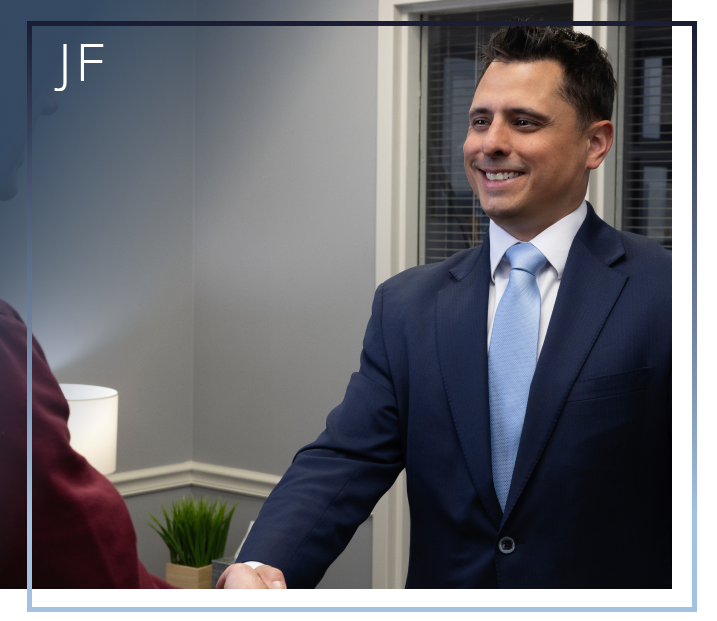
 Meet Your AttorneyJoseph Fanduzz is in an elite group of trial lawyers who have attended and graduated from the National Criminal Defense College.

