Arrested for driving under the influence? At the Law Office of Joseph A. Fanduzz, we represent individuals who are facing charges for drunk driving. A DUI offense should not be taken lightly, because a conviction could result in the suspension of your driver's license, increased insurance rates, and heavy fines. Our Knoxville DUI lawyer has plenty of experience handling drunk driving cases, and we know what it takes to build a defense that is strong enough to get a client’s charges reduced or even dropped.
Arrested for DUI? You only have 10 days to act! Contact our Knoxville DUI lawyers online or by calling (865) 896-9971 to set up your FREE consultation.
Why You Need Our Knoxville DUI Lawyers on Your Side:
When you reach out to us right after an arrest, we can quickly begin gathering police reports, video from the traffic stop, and other evidence that may be critical to your defense. Our team regularly appears in Knox County courts, so we understand how local judges view issues such as prior convictions, alleged refusals, and claims of child endangerment. By having a DUI defense attorney Knoxville residents can turn to for prompt guidance, you give yourself a better chance to preserve your driving privileges and protect your record while your case moves through the system.
We are available 24/7
Our firm offers free consultations
We are skilled in negotiation and litigation
We have an elite trial lawyer on our side
No license, no job. Do not gamble your financial stability following a DUI charge. Instead, contact our experienced Knoxville DUI lawyers at (865) 896-9971 as soon as you’ve been accused.
“Mr. Fanduzz is committed to nothing but the BEST outcome for his clients.”
Nearly two years ago, I was charged with DUI and Speeding. Due to my occupation, a conviction could be detrimental to my career. I contacted Mr. Fanduzz and he was able to have my case placed on Judicial Diversion, which required me to serve only one year supervised probation (reduced from two years) and court cost. I retained my drivers license and did not have to purchase expensive car insurance.
Unfortunately, while on probation, I was charged with two counts of assault and aggravated assault. Along with these new charges, I also faced violation of my probation and the original DUI. All charges were considered Felonies at this point. There was no hesitation in hiring him to represent me again. Mr. Fanduzz not only kept me well informed, he also skillfully and agressively argued on my behalf. He arranged for my probation and judicial diversion to be reinstated and the felony assault charges to be dismissed in exchange for a plea to a misdemeanor offence.
Needless to say, I highly recommend Mr. Fanduzz because of his attention to detail and commitment to have the BEST possible outcome for his clients.
Been a member of the National Criminal Defense College (NCDC) since 2012.
17 years of legal experience, creating customized strategies & individualized client attention.
Highly skilled in the areas of litigation & negotiation when seeking results.
Available to help you & answer your questions 24/7.
DUI Detection & Standardized Field Sobriety Testing Certified
Knoxville DUI FAQ
Local Questions About Knoxville DUI Cases
Answers specific to how DUI cases actually move through Knox County, from the courthouse to the checkpoint.
DUI charges in Knox County are handled specifically by Second Sessions Court, located on the main floor of the City-County Building at 400 Main Street in downtown Knoxville. Most people arrested for DUI are booked at the Roger D. Wilson Detention Facility on Maloneyville Road rather than downtown, which matters for family members trying to locate someone or arrange bond quickly after an arrest.
Tennessee uses a "look-back" period to decide whether a new charge counts as a second, third, or subsequent offense. That period is typically 10 years, though it can extend up to 20 years depending on the case. A DUI conviction itself stays on your record permanently, even after it can no longer be used to enhance a new charge.
Yes. Sobriety checkpoints are legal in Tennessee under both the U.S. and Tennessee constitutions, as long as officers follow strict, pre-approved guidelines that limit their discretion in the field. Law enforcement agencies are also required to publicly announce checkpoint dates and locations in advance. The Knoxville Police Department has run several checkpoints in 2026 alone, including on Kingston Pike, Central Avenue Pike, and near the UT campus in Fort Sanders.
Beyond serving your suspension period, reinstatement generally requires filing SR-22 proof of insurance with the state, paying a reinstatement fee to the Tennessee Department of Safety and Homeland Security, and showing that any court-ordered ignition interlock device has been installed and is being properly maintained.
Commercial drivers are held to a stricter standard. A first DUI conviction, even in a personal vehicle, triggers a minimum one-year disqualification from holding a CDL, with no restricted or hardship license available during that time. A second DUI results in a lifetime disqualification, and CDL holders are also subject to a lower 0.04% BAC limit while operating a commercial vehicle.
It can. The University of Tennessee receives arrest reports from multiple local agencies, including the Knoxville Police Department and Knox County Sheriff's Office, and its own student conduct process can move forward even while your criminal case is still pending in court.
Every DUI case moves through Knox County's courts a little differently. Tell Joseph A. Fanduzz what happened, and get a clear read on where your case stands.
Many people charged with drunk driving have never been through the criminal courts before and are unsure what will happen after they are released from custody. In Knoxville, DUI cases often begin in Knox County General Sessions Court, where the judge will address your initial appearance, bond conditions, and early deadlines. Knowing the basic stages of arraignment, preliminary hearing, and potential Grand Jury review can make the experience less intimidating and help you work more effectively with your drunk driving attorney.
After the first court date, there may be several settings where lawyers review discovery, negotiate with the prosecutor, and file motions challenging the stop, arrest, or testing procedures. If your case is bound over to criminal court, you will face additional decisions about plea offers, motion hearings, and whether to proceed to trial before a jury in Knoxville. Throughout this process, a Knoxville DUI Lawyer can keep you informed about what each date means, what paperwork you will need, and how your choices at each step may affect both the criminal charges and your driver’s license.
2nd time DUI offender
Misdemeanor
45 days to 11 months and 29 days in jail
License revocation for 2 years
$600 to $3,500 fine
Restitution to any person suffering physical injury or personal loss
Participation in a drug and alcohol treatment program
Ignition Interlock Device installed at your expense
If you commit two DUIs in 5 years, an Ignition Interlock Device is required for 6 months after reinstatement, at your expense
Subject to vehicle seizure/forfeiture
3rd time DUI offender
Misdemeanor
120 days to 11 months and 29 days in jail
License revocation for 6 years
$1,100 to $10,000 in fines
Participation in a drug and alcohol treatment program
Ignition Interlock Device installed at your expense
If you commit two DUIs in 5 years, an Ignition Interlock Device is required for 6 months after reinstatement, at your expense
Subject to vehicle seizure/forfeiture
4th and subsequent DUI offender
Class E felony
150 days to 1 year in jail
License revocation for 8 years
$3,000 to $15,000 in fines
Participation in a drug and alcohol treatment program
Ignition Interlock Device installed at your expense
If you commit two DUIs in 5 years, an Ignition Interlock Device is required for 6 months after reinstatement, at your expense
Subject to vehicle seizure/forfeiture
Child endangerment: DUI with passenger under 18 years old
Class D felony if a child suffers serious injury
2 to 12 years in jail
License revocation
Class B felony if child death is involved
8 to 30 years in jail
License revocation
Beyond these statutory penalties, a conviction can affect nearly every part of your daily life. Many people who come to us are concerned about how a second or third DUI will impact their work schedule, professional license, or ability to drive children to school and activities around Knoxville. When you sit down with a Knoxville DUI Lawyer from our firm, we can walk you through the potential consequences in your specific situation and help you understand what to expect in the General Sessions Court or Criminal Court handling your case.
Because Tennessee law becomes harsher with every additional offense, it is vital to get sound legal guidance as early as possible after an arrest. A DUI attorney can help you evaluate whether treatment programs, ignition interlock options, or other alternatives may be available and can also advise you on what to do if your case is connected to an accident investigated by the Knoxville Police Department or the Tennessee Highway Patrol. We take the time to explain how local court practices in Knox County may affect the timeline of your case and your options for seeking a more favorable outcome.
Should I Refuse a Breathalyzer Test?
If an officer accuses someone of driving while under the influence (DUI), it is only a matter of time until he or she asks the suspect to take a breathalyzer test. While many assume they have to comply with the officer’s request, the reality is that they do not have to. In fact, in some circumstances, refusing the test may be in the accused person’s best interest.
Breathalyzers & Implied Consent in Tennessee
Under Tennessee DUI laws, anyone with a driver’s license gives their “implied consent” to take a breathalyzer test when asked by police. Implied consent means any driver under suspicion of a DUI must take a breathalyzer or face an automatic one-year license suspension. Therefore, if you are sure you are under the legal limit, you should take the breathalyzer test to try to save your license.
However, if you believe you are potentially over the legal limit, it may be a good idea to refuse.
Implied consent can pressure people into taking breathalyzer tests, but here are some other facts to consider:
A first-time DUI conviction will result in a one-year license suspension, so taking a breathalyzer while intoxicated could result in a license suspension anyway.
You may qualify for a restricted driver’s license that lets you drive despite refusing a breathalyzer test.
It is often easier to defend a DUI case when there is no hard proof of intoxication. Therefore, refusing a breathalyzer may take away important evidence from the prosecution.
Based on these facts, it is important to weigh your options carefully when asked to take a breathalyzer.
We encourage anyone facing this choice to think about where they are in the process and what other evidence may already exist, such as field sobriety tests or dash camera footage from the stop. A brief phone call with a Knoxville DUI Attorney after an arrest can help you understand how your decision about testing might affect both the criminal case and any implied consent hearing regarding your license. Because these hearings are often scheduled quickly in Knox County, time is critical if you hope to keep driving to work, school, or family obligations.
Knox County · General Sessions · Second Sessions Court
The Knoxville DUI Courthouse Guide
Where to go, when to be there, what not to wear, and what each court date actually is — for DUI cases heard in Knox County, Tennessee. Every rule below comes from Knox County's own published court rules and clerk guidance.
Courtroom
Second Sessions Court
Address
400 Main Street Knoxville, TN 37902
Docket opens
8:30 a.m. see note below
Clerk
Suite M84 (865) 215-2375
City-County Building — how the levels work
Main Floor
Second Sessions Court — DUI cases
First Sessions (misdemeanors) · Third Sessions (felonies) · Fourth Sessions (traffic & bonded arraignment)
General Sessions Criminal Clerk — Suite M84
Criminal Court Division III · Main Street entrance arrives here
First Floor
Criminal Court Divisions I and II
Criminal Court Clerk — Suite 149
Level L-1
Hill Street entrance arrives here — take the elevators up
Accessible on-street parking is on this side of the building
"Main Floor" and "First Floor" are two different levels in this building. General Sessions DUI court is on the Main Floor. If someone tells you "first floor," ask which one they mean.
A note on start times. Knox County's Rules of Practice (Rule 4) state that First through Fourth Sessions open at 8:30 a.m. for the daily docket, while the court's Courts, Protocols & Locations page states courts open at 9:00 a.m. Because the two official sources differ, confirm your report time with your attorney or the clerk, and arrive early enough to clear security either way.
DUI Court is conducted in Second Sessions Court, on the main floor of the City-County Building at 400 Main Street.
Second Sessions is broader than most people expect. It hears all DUI offenses — including fourth and subsequent offenses — plus vehicular assault and vehicular homicide regardless of the alleged cause, and habitual motor vehicle offender charges.
The criminal dockets are also posted daily at the General Sessions Criminal Clerk's office in the building.
General Sessions runs five days a week, and closes for holidays, official conferences, and whenever a judicial order directs.
Two public entrances
Main Street entrance — puts you on the main floor. Clear security, then cross the glass walkway to the main floor lobby.
Hill Street entrance — puts you on Level L-1. Clear security, then take the elevators up.
Both are secure entrances with a metal detector and security officers. No weapons of any kind may be brought into the courthouse. Separately, Local Rule 7 requires every person entering a courtroom to consent to a search of their person and belongings — deputies will deny admission to anyone who refuses.
Do not plan on the City-County Building garage. The garage at 400 West Main Street is restricted to employees from 7:00 a.m. to 5:00 p.m. — exactly when your docket is called. Its free parking applies to the top deck, weeknights after 5 p.m., and weekends.
Public garages to use instead
Dwight Kessel Garage — 900 State Street. This is the garage the Clerk's office maps walking directions from.
Main Avenue Garage — 550 West Main Avenue.
State Street Garage — 500 State Street.
Locust Street Garage — 540 Locust Street.
Clearances in several of these garages run around 6′10″–6′11″. If you drive a lifted truck or a van with a roof rack, measure before you commit to a ramp. Current locations and details are on the Public Building Authority parking site.
Accessible parking and transit
Free on-street accessible spaces with a two-hour limit along Hill Avenue (the L-1 entrance side), plus two on Main Street in front of the Old Courthouse.
Questions about accessible parking go to the Judicial ADA Coordinator at (865) 215-4437.
The free downtown trolley drops off directly in front of the building.
Full building and parking detail, including a virtual walkthrough, is on the Clerk's Coming to Court page.
You can carry a phone into the building. What matters is what happens once you cross the courtroom door.
Local Rule 5: while in the courtroom, cellular and digital devices shall not be used and must be turned off or placed in silent mode. Any use or ringing of a device results in confiscation of the device.
Recording devices — audio or visual — are prohibited in the courtroom. The exceptions are narrow: counsel and self-represented litigants at trial under T.C.A. § 20-9-104, and credentialed media operating under Tennessee Supreme Court Rule 30 and Local Rule 21. Media coverage also has to be requested in writing to the Presiding Judge and Clerk by 4:30 p.m. on the third business day before the proceeding.
Practically
Silence it in the hallway, not at your seat.
Don't text at counsel table, even to your family.
Don't film your own hearing, and don't let anyone with you film it.
Local Rule 5 requires appropriate attire and names the items that are not allowed in the courtroom:
Shorts, muscle shirts, tee shirts with inappropriate language, baggy or low-riding pants
See-through clothing
Backless, tank, or halter tops
Pajamas, house shoes, or house slippers
Hats, bandanas, wave caps, or hoods
Head coverings may be worn for religious purposes, provided facial features remain clearly visible. Hats, overcoats, raincoats, and sunglasses come off before you enter.
Conduct rules people trip over
No food, drink, chewing gum, or reading materials in the courtroom.
Everyone rises when court is called and stays standing until the bailiff formally opens court.
The area inside the bar is reserved for participants, witnesses, and court officers. Everyone else sits outside it.
Seating is first come, first served. Once the audience seats are full, the bailiff cannot admit anyone else without the court's permission.
Do not communicate with inmates unless the judge specifically permits it.
Where possible, defense witnesses sit on the side behind the defendant and counsel.
No loud talking or loitering in the halls near a courtroom while court is in session.
The defendant sits at the defense table during any hearing or trial unless that is waived in writing and ordered by the court.
Disorderly behavior can get you removed from the courtroom under Rule 43 of the Tennessee Rules of Criminal Procedure. Bring identification: questions about a defendant's identity are resolved with the court before proceedings begin.
Arraignment / initial appearance
The hearing where the charge is formally read to you, the court determines whether you qualify for appointed counsel, and the matter is set for hearing before a General Sessions judge under Tenn. R. Crim. P. 5.
In Knox County a judicial magistrate may conduct this initial appearance over approved audiovisual equipment located in the City-County Building jail or at the detention facility — so if you are still in custody, you may see the magistrate on a screen rather than in person.
Bonded Arraignment Court. If you were released from custody without seeing a judge or magistrate, your arraignment is in the Fourth Sessions Courtroom on the main floor, held daily at 10:00 a.m. You must report on the exact date and time your release officer specified. Failure to report results in immediate arrest.
If your charge arrived as a misdemeanor citation rather than a custodial arrest, bookings on misdemeanor citations take place at the City-County Building at 7:30 a.m. on the scheduled date; the booking schedule is published every two months.
Docket call / court setting
This is the daily DUI docket in Second Sessions, where your case is one of many called in turn. Early settings tend to be short and administrative: discovery status, paperwork, reset dates. Expect to wait, and expect the day to be about scheduling rather than resolution.
Local Rule 13 puts the burden on you. You are responsible for knowing when you are scheduled to appear, and for appearing at every hearing, trial setting, subsequent setting, trial, and report-back date. You must be physically present unless your absence is waived in advance in writing and ordered by the court. Failure to appear constitutes contempt of court.
A routine docket setting is a scheduling and negotiation date, not a sentencing hearing. Nothing in the Knox County court schedule or local rules turns an ordinary appearance into custody by itself.
The situations that actually create custody risk are specific, and worth knowing so you can avoid them:
1 — Not appearing
Failure to appear is contempt of court under Local Rule 13. Failing to report to Bonded Arraignment Court as scheduled results in immediate arrest.
2 — Sentencing after a plea or conviction
Once judgment is pronounced, the statutory penalties for the offense apply. That is a distinct hearing from an early docket setting.
3 — Compliance Review and probation violations
Under Local Rule 15, your case goes on Compliance Review after judgment if you do not immediately pay all fines and costs in full, if you were ordered into treatment or restitution or to complete a program, or if you were placed on supervised probation. If the court finds you presently cannot pay in full, it may order a payment plan with the Clerk's office with full payment due by a date certain. Missing payments or failing a condition can bring a probation violation charge — which puts the case back on the regular docket before the sentencing judge and may result in serving the jail sentence. Court costs and fees for General Sessions criminal matters are paid through KnoxCourtPay.
One structural point on repeat charges. General Sessions Court cannot accept pleas on felony charges. Because a fourth or subsequent DUI is a Class E felony, Second Sessions handles the case but cannot take a plea on it — resolution moves to the Grand Jury and Criminal Court.
The Knox County District Attorney General's office sets out four options for a defendant charged with a misdemeanor at this level:
Plead guilty to the charge.
Have a preliminary hearing, at which the State must show probable cause for the case to proceed to the Grand Jury.
Send the case to the Grand Jury without a preliminary hearing.
Have a bench trial — which requires the State's agreement, and at which the State must prove guilt beyond a reasonable doubt.
There is no jury at this level. A jury trial happens in Criminal Court.
A defendant charged with a felony has a different set of four options: a preliminary hearing; sending the case to the Grand Jury without one; pleading guilty to a lesser misdemeanor charge if the State offers it; or entering a "plea by information" that bypasses the Grand Jury and resolves the felony in Criminal Court.
Which option fits a given case is a strategy decision, not a formality — and it is the decision that most shapes what happens next.
The Knox County Grand Jury is a body of thirteen citizens that decides whether there is probable cause to require a defendant to stand trial. Probable cause found is a True Bill; not found is a No True Bill.
Indictment vs. presentment — this affects your bond. A case that comes up from General Sessions becomes an Indictment, and because it continues an existing case the original bond usually carries over. A case the District Attorney's office initiates directly in the Grand Jury becomes a Presentment — and because a presentment is not a continuation, it requires the defendant to be arrested and to make a new bond.
After an indictment or presentment, you are arraigned in Criminal Court: the charge is formally read, and you may enter a plea of guilty or not guilty, or reserve entry of plea for a later date. If you have not hired an attorney, the court screens whether you qualify financially for appointed counsel.
There are three divisions of Knox County Criminal Court, and the Criminal Court Clerk's Office assigns every case to one of them. At arraignment the judge may set a trial date, a plea deadline, and a deadline for filing or arguing motions.
Note the level change: Criminal Court Divisions I and II sit on the first floor, and Division III on the main floor. The room you learned to find in General Sessions is not the room you will report to next.
Five elected General Sessions judges serve eight-year terms and rotate through the courtrooms on a five-week schedule. The judge on your DUI docket in one month may not be the judge two months later — which is why local familiarity with all five matters more here than in a single-judge court.
The clerk cannot help the way you'd hope
The Criminal Court Clerk's Office states plainly that it cannot offer legal advice and cannot reset court dates.
Local Rule 22 bars non-attorney court personnel from interpreting rules of procedure or giving legal advice, and the court takes no responsibility for misinformation about substantive law, procedure, or local custom.
Local Rule 14: clerks are not authorized to grant continuances.
Continuances get harder fast
The first time a case is set for trial, it may be continued for good reason at the judge's discretion. The second time and after, it will be continued only for compelling reasons — and the rule expressly lists what generally is not compelling:
The client has not paid the fee
The client has not been to see the attorney
Lack of preparation
Anything already known at the time of the first continuance
Subpoenas have a gate
Subpoenas must issue at least seven days before the trial date, and the clerk will not issue subpoenas at the initial setting if the warrant shows counsel has not yet been retained or appointed. Failure to subpoena a witness is not grounds for a continuance — which is a practical argument for getting counsel in place before that first setting.
ADAT: state-funded treatment
Knox County General Sessions participates in the state Alcohol and Drug Addiction Treatment (ADAT) program, which funds treatment for indigent defendants convicted of certain DUI offenses. Key features:
It is post-conviction — the judge determines whether you meet the criteria and can benefit from it.
It can include up to 28 days of inpatient treatment, with other levels of care set by the provider.
It is authorized as a condition of probation.
After inpatient treatment finishes, any remaining portion of the sentence is served in the county detention facility.
It is funded partly by a $100 ADAT fee assessed on each conviction under T.C.A. § 55-10-401 and partly by sales of forfeited vehicles. Entry depends strictly on the availability of funds.
Expungement runs on its own calendar
All expungements go through the Expungement Review Panel, held Monday and Thursday from 3:00 to 4:15 p.m. in the Fourth Sessions Courtroom.
Charges dismissed or nolle prossed are expunged at no cost.
Records where the defendant was placed on a diversion program carry a $100 fee, plus a $25 filing fee.
All court costs must be paid before an expungement can be completed.
The law allows 60 days for the process, and records are expunged in the order filed.
The judge
One of five elected Knox County General Sessions judges — the Honorable Chuck Cerny (Division I), Judd Davis (II), Patricia Hall Long (III), Andrew Jackson VI (IV), and Tony W. Stansberry (V) — rotating through the courtrooms on a five-week schedule.
The prosecutor
An assistant district attorney from the Knox County District Attorney General's office, led by District Attorney General Charme Allen. The office is in the City-County Building, Suite 168.
The court officer (bailiff)
Responsible for compliance with courtroom procedure and decorum. Each division has at least one court officer, one deputy clerk, and one computer clerk present while court is in session. The bailiff is who tells you where to sit — and who confiscates a ringing phone.
The clerk
Mike Hammond, Clerk of the Criminal, General Sessions Criminal, and Fourth Circuit Courts. General Sessions Criminal office: main floor, Suite M84. Criminal Court office: first floor, Suite 149. (865) 215-2375, Monday–Friday 8:00 a.m.–4:30 p.m.
Judicial magistrates
Knox County has five, appointed to set bonds, sign arrest warrants, and issue search warrants. A magistrate — not a General Sessions judge — is usually who set your bond conditions.
Under Local Rule 5, attorneys are personally accountable to the court for their clients' conduct in the courtroom, and are expected to note their representation on the criminal warrant. Under Rule 6, a litigant may also represent themselves.
Knowing the building is the easy part. What happens on the record in Second Sessions — which option you take, what gets negotiated, and how your license is handled — is where a case is won or lost.
Court locations, schedules, fees, and personnel change. Verify times and courtroom assignments with the Knox County Criminal Court Clerk before you travel. This information is general and is not legal advice for any specific case.
Let Our Knoxville DUI Lawyers Challenge Your DUI Conviction!
Oftentimes, many individuals simply accept their charges and allow for a DUI to go on their driving record. However, there are ways to challenge a DUI. Our Knoxville DUI attorneys are not afraid to fight on our clients' behalf to protect their license, driving record, and insurance rates. We will not hesitate to argue against the methods used by the arresting officer or to contest the evidence brought forth by the prosecution.
We carefully examine whether the officer had a lawful basis to stop your vehicle, how roadside tests were administered, and whether any breath or blood test followed Tennessee Department of Safety procedures. In some cases, we may consult with forensic or medical professionals to review the accuracy of test results or the impact of medications and medical conditions. By taking a thorough approach and preparing every matter as though it could proceed to trial in a Knoxville-area courtroom, our drunk driving attorney provides clients with a clear strategy and realistic expectations about the possible outcomes in their case.





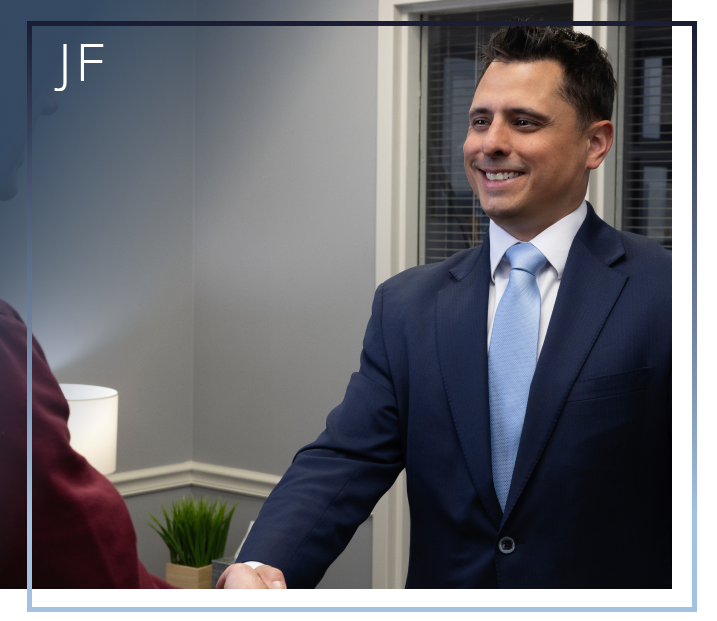
 Meet Your AttorneyJoseph Fanduzz is in an elite group of trial lawyers who have attended and graduated from the National Criminal Defense College.

